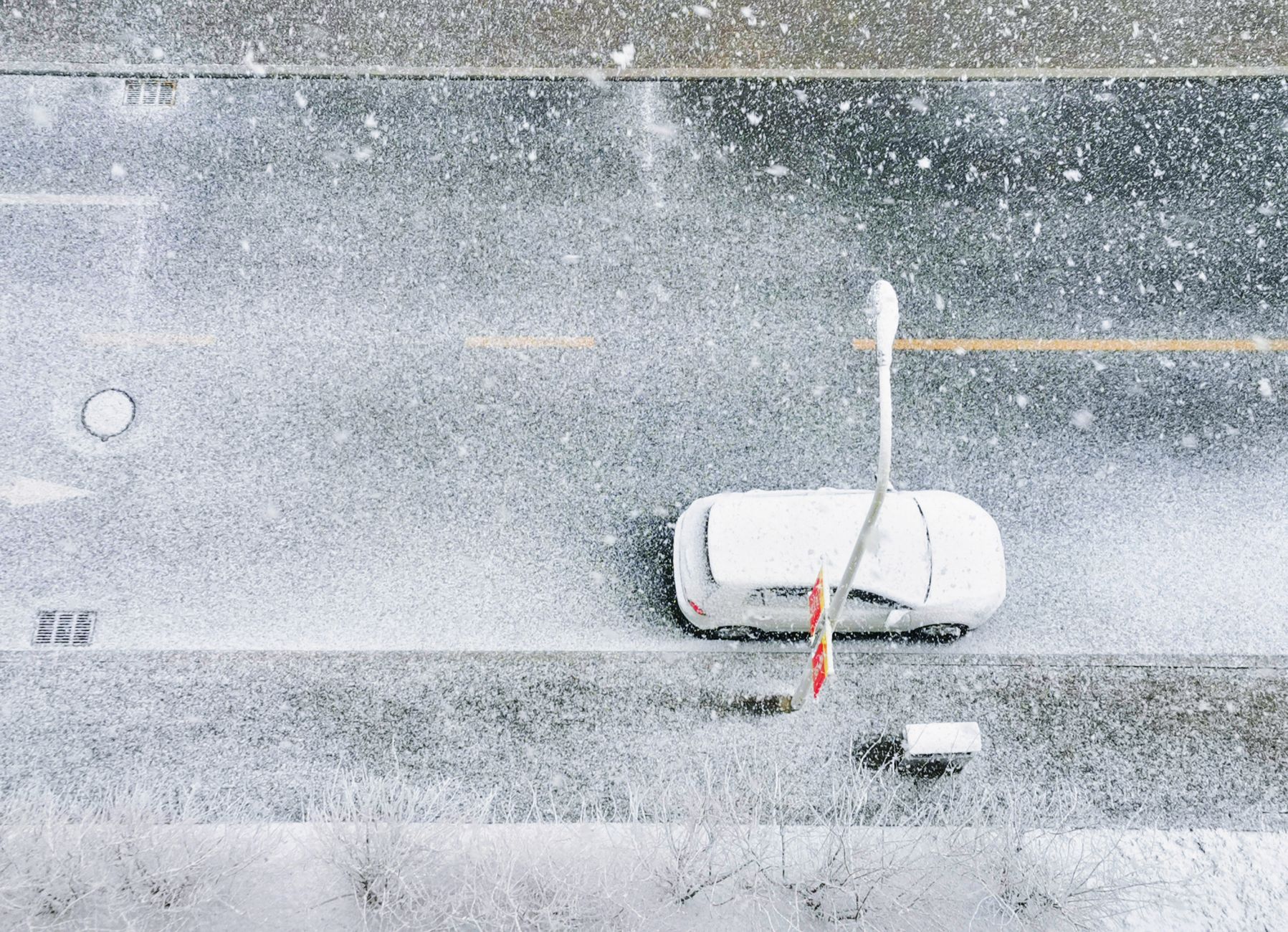
Waymo says it is preparing its self-driving cars for winter. Its published safety comparison does not establish how they perform on snow-covered roads.
That gap matters for the Chicago area as state lawmakers weigh whether to authorize driverless vehicles in Illinois. On Nov. 5, Waymo published a blog post describing how its 6th-generation system uses cameras, radar and lidar to navigate winter roads, with built-in heaters and micro-wipers to keep sensors clear. The company said it equips its winter-weather fleet with snow tires and measures real-time traction under each wheel.
But the post did not disclose the specific weather thresholds that trigger a service pause or reduction. Waymo said it evaluates conditions through its Safety Framework and will "proactively adjust our service, including reducing the service area or pausing our service entirely" when weather exceeds validated boundaries. Pauses "may last for hours or even days," the company said.
Safety numbers, warm-weather cities
Waymo's own safety dashboard reports 271.3 million rider-only miles driven through June 2026 without a human driver. The company claims 82% fewer injury-causing crashes and 95% fewer serious-injury-or-worse crashes compared with human drivers.
An independent study tells a similar but more cautious story. The Insurance Institute for Highway Safety found in July 2026 that Waymo's driverless vehicles were involved in 68% fewer police-reportable crashes per mile than human drivers.
IIHS President David Harkey said the results "show that, on a limited scale, these driverless cars are safer than human drivers." He added a caveat: "the present data collection system isn't good enough to allow continuous monitoring of a large-scale expansion."
The sample covered about 50 million driverless miles in Phoenix, San Francisco, Los Angeles and Austin.
But snow doesn't fall in Phoenix or L.A.
Waymo acknowledged the weather limitation on its own safety page. The company stated that "the current cities Waymo operates in do not have appreciable snow fall, and as a result neither the Waymo nor the human benchmark data include this type of inclement weather."
Testing, but no winter track record
Waymo said it has accumulated "tens of thousands of real-world miles" testing in Upstate New York, Michigan's Upper Peninsula and the Sierra Nevada. It plans closed-course evaluations and heavy-snowfall data collection in Alaska. The company also uses simulation to recreate black ice and whiteouts digitally.
Its fully driverless Detroit operation began in October 2026, initially serving employees, according to an op-ed in Streetsblog Chicago by civic educator Ellen Steinke.
Steinke wrote that Waymo "has not yet demonstrated a full winter of driverless passenger service" in Detroit. She argued Illinois should "require independently evaluated performance under local conditions before authorizing large-scale deployment."
Recent incidents raise questions
Federal records show Waymo has faced safety problems even in fair weather. The National Transportation Safety Board reported that on Jan. 23, 2026, a Waymo vehicle struck a 9-year-old pedestrian in a Santa Monica school zone. The student reported minor injuries. The weather was clear and the road dry.
Separately, the NTSB reported that Waymo vehicles passed school buses with extended stop arms in Texas, violating state law. Waymo recalled 3,067 vehicles in December 2025 to fix the software bug. The company said 12 citations resulted from the behavior between Sept. 25 and Nov. 14, 2025. No collisions occurred.
In San Antonio, Waymo paused operations on April 20, 2026, after an unoccupied vehicle entered a flooded road during heavy rain and was pulled into flowing water, KSAT reported.
Illinois legislation stalled
Driverless vehicles are not authorized in Illinois.
State Rep. Kam Buckner, D-Chicago, introduced House Bill 4663, the Autonomous Vehicle Pilot Project Act, which would restrict testing to counties with more than a million residents and several downstate areas. The bill would require Illinois Department of Transportation approval, and IDOT could authorize statewide deployment three years after the bill takes effect if pilot programs succeed, the Chicago Tribune reported.
Buckner acknowledged Chicago's conditions pose a challenge.
"Painted lane markings, potholes, construction zones, temporary traffic controls. They're all common and they're more common in Chicago than most places," he said, according to the Tribune.
The bill remained stalled in the House Rules Committee as of October 2026, according to WGLT.
Jim Merrell, advocacy director with the Active Transportation Alliance in Chicago, said the bill would preempt local authority, preventing cities like Chicago from regulating where autonomous vehicles operate.
HB 4663 would need legislative approval and the governor’s signature, or a veto override, to become law.